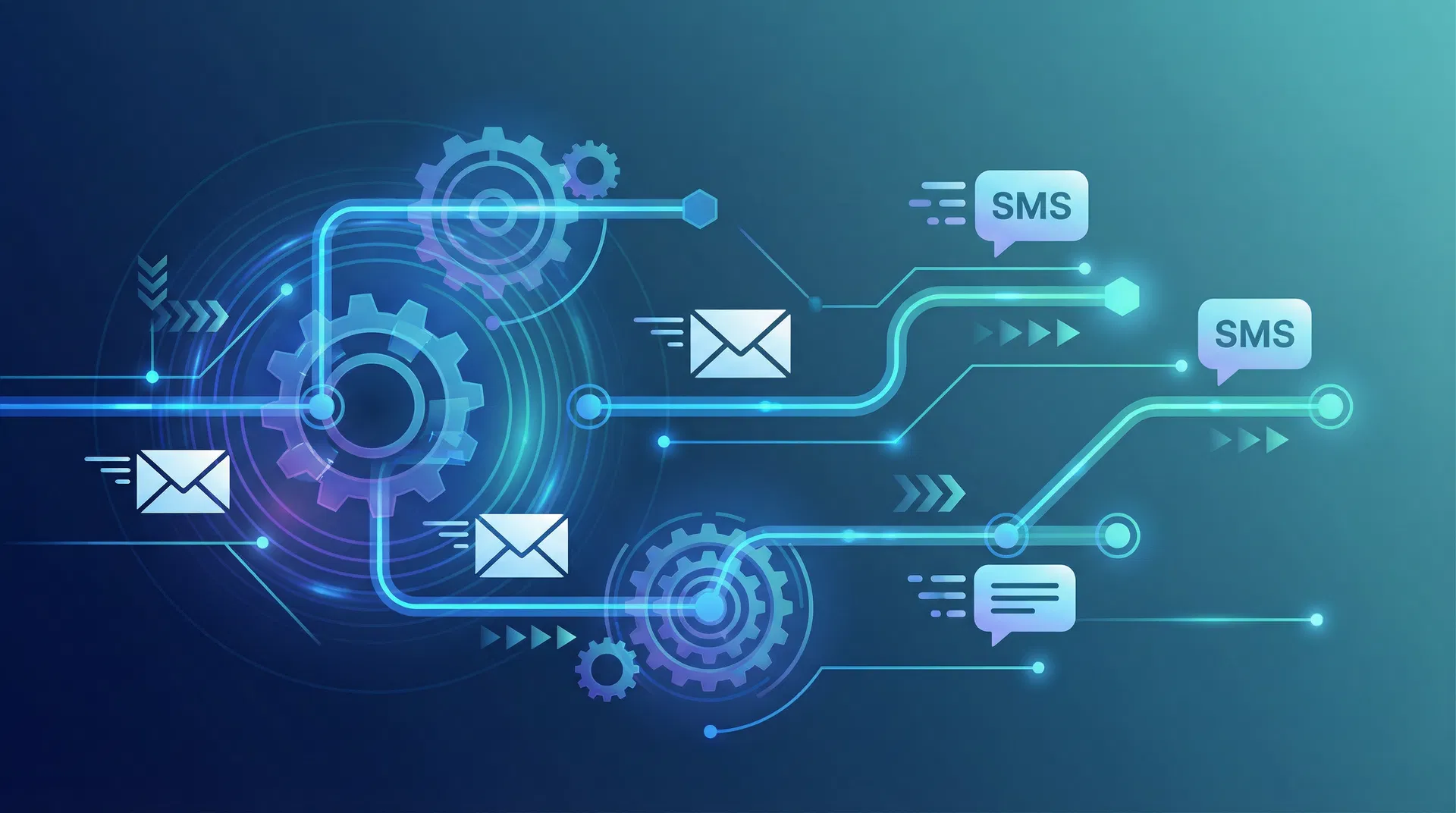
Marketing automation has transcended from a niche technology to an indispensable cornerstone of effective digital marketing. As we approach 2026, its role in delivering hyper-personalized, timely, and relevant communications across email and SMS channels becomes even more critical. Businesses that fail to embrace sophisticated automation risk being left behind in a fiercely competitive landscape where customer experience dictates success.
What Marketing Automation Is and Why It Matters in 2026
Marketing automation refers to the use of software and technologies to automate repetitive marketing tasks. This includes automating email sends, SMS messages, social media posts, and other website actions. The core objective is to streamline marketing efforts, improve efficiency, and deliver personalized experiences at scale, ultimately driving customer engagement, conversions, and loyalty.
In 2026, the significance of marketing automation is amplified by several key factors:
* Customer Expectation for Personalization: Modern consumers expect brands to understand their individual needs and preferences. Generic, mass-blast campaigns are increasingly ignored or marked as spam. Automation allows for tailored messaging based on behavior, demographics, and past interactions.
* Data Proliferation and AI-Powered Insights: The sheer volume of customer data available is growing exponentially. Automation platforms, increasingly powered by AI and machine learning, can analyze this data to predict customer needs, optimize send times, and suggest next-best actions, making campaigns far more effective.
* Multi-Channel Imperative: Customers interact with brands across numerous touchpoints. A cohesive, multi-channel strategy that seamlessly integrates email and SMS is no longer a luxury but a necessity. Automation facilitates this integration, ensuring consistent messaging and a unified customer journey.
* Operational Efficiency and ROI: Automating routine tasks frees up marketing teams to focus on strategy, creativity, and high-impact initiatives. Studies consistently show a strong ROI for marketing automation. According to Invespcro, 80% of marketing automation users saw an increase in leads, and 77% saw an increase in conversions. Additionally, Nucleus Research found that marketing automation drives a 14.5% increase in sales productivity and a 12.2% reduction in marketing overhead.
* Scalability: As businesses grow, manual marketing efforts become unsustainable. Automation allows for scaling marketing efforts without a proportional increase in resources, making it a critical tool for growth-oriented companies.
Essential Automation Workflows
Effective marketing automation hinges on well-designed workflows that address specific customer journey stages. Here are the foundational workflows critical for email and SMS campaigns in 2026:
Welcome Series Workflow
* Trigger: New subscriber sign-up (email list, SMS opt-in, account creation).
* Purpose: To onboard new subscribers, introduce your brand, set expectations, and encourage initial engagement.
* Channels: Primarily email, often augmented with an initial SMS confirmation.
* Expected ROI: High open rates, increased initial engagement, reduced churn.
* Sequence Example:
1. Email 1 (Immediate): Welcome message, thank you for subscribing, introduce brand mission/values, offer a small discount.
2. SMS 1 (Optional, within 5 mins): "Welcome to [Brand Name]! Thanks for joining. Check your inbox for a special offer. Reply STOP to unsubscribe."
3. Email 2 (Day 2): Highlight popular products/services, showcase customer testimonials or unique selling propositions.
4. Email 3 (Day 4-5): Educational content, how-to guides, or a deeper dive into a specific product category.
5. Email 4 (Day 7): Last chance for initial offer, call to action to browse or complete a profile.
Abandoned Cart Workflow
* Trigger: User adds items to their cart but leaves the website without completing the purchase.
* Purpose: To recover lost sales by reminding customers of their abandoned items and addressing potential barriers to purchase.
* Channels: Email and SMS.
* Expected ROI: Significant recovery of potential revenue. Baymard Institute reports the average cart abandonment rate is nearly 70%. Effective abandoned cart campaigns can recover 5-10% of these sales.
* Sequence Example:
1. Email 1 (1-2 hours): Friendly reminder of items in cart, link back to cart.
2. SMS 1 (3-4 hours, if no conversion from Email 1): "Hey [Customer Name], don't forget your items at [Brand Name]! Complete your order here: [Link]"
3. Email 2 (24 hours, if no conversion): Offer a small incentive (e.g., free shipping, 5% discount) to complete the purchase, highlight urgency/scarcity.
4. Email 3 (48-72 hours, if no conversion): Address common objections (e.g., return policy, customer support contact), social proof.
Re-engagement Workflow
* Trigger: Inactivity for a specified period (e.g., 30, 60, 90 days without opens, clicks, or purchases).
* Purpose: To reactivate dormant subscribers or customers, prevent churn, and clean your list.
* Channels: Email and SMS.
* Expected ROI: Reduced list decay, improved sender reputation, potential for renewed purchases.
* Sequence Example:
1. Email 1 (Day 30 of inactivity): "We Miss You!" – Reiterate value proposition, showcase new products/content.
2. Email 2 (Day 60 of inactivity): "Don't Miss Out!" – Offer a compelling incentive to re-engage (e.g., significant discount).
3. SMS 1 (Day 75 of inactivity, if no engagement): "Is this still a good number for [Brand Name] updates? Click here to confirm your interest: [Link]"
4. Email 3 (Day 90 of inactivity): "Last Chance to Stay Connected" – Clearly state that they will be unsubscribed if no action is taken. Provide an easy way to confirm interest.
Post-Purchase Workflow
* Trigger: Successful purchase confirmation.
* Purpose: To enhance customer satisfaction, provide necessary information, encourage reviews, and drive repeat purchases.
* Channels: Email and SMS.
* Expected ROI: Increased customer loyalty, positive reviews, higher lifetime value (LTV).
* Sequence Example:
1. Email 1 (Immediate): Order confirmation, shipping details, estimated delivery date.
2. SMS 1 (Optional, immediate): "Your [Brand Name] order #[Order Number] is confirmed! Tracking: [Tracking Link]"
3. Email 2 (Post-delivery, Day 2-3): Follow-up, tips for using the product, cross-sell/upsell relevant items.
4. Email 3 (Day 7-14): Request for product review, encourage sharing on social media.
5. Email 4 (Day 30-60, depending on product lifecycle): Suggest replenishment, related products, or exclusive loyalty offers.
Birthday/Anniversary Workflow
* Trigger: Customer's birthday or anniversary of becoming a customer/subscriber.
* Purpose: To build rapport, show appreciation, and encourage celebratory purchases.
* Channels: Email and SMS.
* Expected ROI: Increased customer loyalty, boosted sales during the celebration period. Birthday emails can generate 342% higher revenue per email than promotional emails (Experian).
* Sequence Example:
1. Email 1 (7 days before): "A little something for your special day!" – Offer an exclusive discount or free gift.
2. SMS 1 (On the day): "Happy Birthday, [Customer Name]! Celebrate with [Brand Name] and enjoy [Offer]! [Link]"
3. Email 2 (Day 3 after, if no purchase): Friendly reminder of the offer, emphasize expiration.
Trigger Types and How They Work
Triggers are the events or conditions that initiate an automation workflow. Understanding different trigger types is crucial for building dynamic and responsive campaigns.
Behavioral Triggers
These are based on user actions (or inactions) on your website, app, or within your emails.
* Examples:
* Viewing a specific product page (but not purchasing).
* Clicking a link in an email.
* Downloading a resource.
* Abandoning a search query.
* Adding an item to a wishlist.
* How they work: Tracking pixels or API integrations monitor user activity. When a predefined action occurs, the automation platform registers it and initiates the corresponding workflow.
Time-Based Triggers
These triggers are activated at specific time intervals or dates.
* Examples:
* X days after a purchase.
* Specific date (e.g., holiday, birthday).
* Time since last interaction (e.g., 30 days of inactivity).
* Recurring schedule (e.g., weekly newsletter).
* How they work: The automation platform's scheduler or calendar function monitors the passage of time or specific dates, activating workflows accordingly.
Event-Driven Triggers
Similar to behavioral triggers but often encompassing broader, significant events in the customer lifecycle or business operations.
* Examples:
* Account creation.
* Subscription renewal.
* Product back in stock.
* Price drop alert.
* Customer service interaction (e.g., ticket closed).
* How they work: These often rely on API integrations with CRM, e-commerce platforms, or other business systems that communicate when a specific event occurs.
Conditional Triggers
These triggers introduce logic into workflows, allowing different paths based on specific conditions.
* Examples:
* IF customer is a VIP, THEN send exclusive offer.
* IF cart value > $100, THEN offer free shipping.
* IF customer has purchased X product, THEN cross-sell Y product.
* IF email opened, THEN wait 2 days; ELSE send SMS reminder.
* How they work: Automation platforms use "if/then/else" logic to evaluate conditions and direct subscribers down different branches of a workflow, enabling highly personalized journeys.
Multi-Channel Automation: Combining Email and SMS Triggers
The true power of modern marketing automation lies in its ability to orchestrate seamless experiences across multiple channels. Combining email and SMS within workflows ensures you reach customers where they are most receptive, based on the urgency and nature of the message.
* Strategic Integration: Don't just send the same message on both channels. Use SMS for urgent, time-sensitive, and concise messages (e.g., shipping updates, flash sales, appointment reminders, abandoned cart nudges). Reserve email for richer content, detailed information, brand storytelling, and longer-form offers.
* Conditional Channel Switching: Leverage conditional triggers to determine the best channel. For example, if an email isn't opened within a certain timeframe, trigger an SMS reminder. This ensures message delivery while respecting channel preferences.
* Consistent Messaging: While the format differs, the core message and brand voice should remain consistent across email and SMS to maintain a cohesive customer experience.
* Opt-in Management: Always ensure you have explicit opt-in for both email and SMS, and provide clear unsubscribe options for each channel.
Building Effective Automation Sequences Step-by-Step
Creating robust automation sequences requires careful planning and execution.
1. Define Your Goal: What do you want this workflow to achieve? (e.g., increase conversions, reduce churn, improve engagement).
2. Map the Customer Journey: Understand the specific touchpoints and actions related to your goal. Where does the customer start, what actions do they take, and what are their potential pain points?
3. Identify Triggers: Based on the journey, determine the specific actions or events that will initiate the workflow.
4. Design the Sequence Logic:
* Start with the trigger.
* Determine initial communication: Which channel first (email or SMS)?
* Add delays: Give customers time to act before the next message.
* Introduce conditional splits: "If X happens, do Y; else, do Z." (e.g., If email opened, proceed; if not, send SMS.)
* Define message content for each step: Tailor content, offers, and calls to action.
* Specify exit conditions: When should the customer exit the workflow (e.g., after purchase, after re-engagement)?
5. Craft Compelling Content: Write clear, concise, and persuasive copy for both email subject lines, body content, and SMS messages. Use personalization tokens.
6. Set Up in Your Platform: Use SESender's intuitive drag-and-drop workflow builder to configure your sequence.
7. Test Thoroughly: Before going live, test every path of your workflow to ensure it functions as intended.
8. Launch and Monitor: Deploy the workflow and closely track its performance.
Personalization and Segmentation within Automation
Generic messaging is a relic of the past. In 2026, personalization and segmentation are not just best practices; they are foundational to automation success.
Personalization
* Dynamic Content: Use merge tags to insert customer-specific data (name, recent purchase, city, loyalty points) into messages.
* Behavioral Personalization: Tailor product recommendations or content based on past browsing history, purchase behavior, or email engagement.
* Time-Sensitive Offers: Personalize offers based on customer lifecycle stage or specific dates (e.g., birthday).
Segmentation
* Demographic Segmentation: Group customers by age, gender, location, income, etc.
* Psychographic Segmentation: Group by interests, values, attitudes, and lifestyle.
* Behavioral Segmentation: Group by purchase history, website activity, email engagement, loyalty status, or inactivity.
* Lifecycle Stage Segmentation: Group by new subscribers, active customers, VIPs, dormant customers, churn risks.
By segmenting your audience, you can create highly targeted workflows that deliver the right message to the right person at the right time, dramatically increasing relevance and conversion rates. For example, a "VIP Customer" segment might receive exclusive early access to sales via SMS, while a "New Subscriber" segment receives a welcome email series.
Testing and Optimizing Automation Workflows
Automation is not a "set it and forget it" endeavor. Continuous testing and optimization are vital for maximizing ROI.
A/B Testing Elements
* Subject Lines: Test different headlines for open rates.
* Call to Actions (CTAs): Test button text, color, and placement.
* Message Content: Experiment with different copy, images, and offers.
* Send Times/Delays: Optimize when messages are sent within a sequence.
* Channel Preference: Test if an SMS follow-up is more effective than a second email.
* Workflow Paths: Test different conditional logic to see which paths perform better.
Key Automation Metrics to Track
| Metric | Description | Why it Matters |
|---|---|---|
| Email Open Rate | Percentage of recipients who opened your email. | Indicates subject line effectiveness and list health. |
| Email Click-Through Rate (CTR) | Percentage of recipients who clicked a link in your email. | Measures content relevance and CTA effectiveness. |
| SMS Delivery Rate | Percentage of SMS messages successfully delivered to the recipient's device. | Ensures messages are reaching their destination. |
| SMS Click-Through Rate (CTR) | Percentage of SMS recipients who clicked a link in your message. | Measures engagement and effectiveness of SMS CTAs. |
| Conversion Rate | Percentage of recipients who completed the desired action (e.g., purchase). | Direct measure of workflow effectiveness in achieving its goal. |
| Unsubscribe Rate | Percentage of recipients who opted out of your communications. | High rates indicate irrelevant content or excessive messaging. |
| Lead Nurturing Time | Average time it takes for a lead to move through the sales funnel via automation. | Efficiency of your lead nurturing workflows. |
| Revenue Generated by Automation | Total sales attributed to automated campaigns. | Direct financial impact and ROI of your automation efforts. |
| Customer Lifetime Value (CLTV) | Predicted total revenue a customer will generate over their relationship. | Measures long-term impact of retention and post-purchase workflows. |
| Cart Recovery Rate | Percentage of abandoned carts recovered by the workflow. | Specific to abandoned cart campaigns, measures direct revenue recovery. |
Regularly review these metrics in SESender's analytics dashboard to identify areas for improvement and refine your workflows.
Common Mistakes to Avoid
Even with powerful tools, missteps can derail automation efforts.
* Over-Automating: Sending too many messages or automating trivial interactions can annoy customers and lead to unsubscribes.
* Lack of Personalization: Generic messages in an automated sequence defeat the purpose of automation.
* Ignoring Opt-Ins/Opt-Outs: Failing to respect consent can lead to legal issues and damage brand reputation.
* Poorly Defined Triggers: Vague or incorrect triggers can lead to irrelevant messages being sent.
* No Exit Conditions: Customers should exit a workflow once they complete the desired action (e.g., purchase after abandoned cart).
* Neglecting Testing: Untested workflows can contain errors that damage customer experience.
* Forgetting to Update Content: Automation content needs to be reviewed and updated regularly to remain fresh and relevant.
* Siloed Channel Strategies: Treating email and SMS as entirely separate entities instead of integrated components of a unified strategy.
* Not Monitoring Performance: Launching a workflow and never checking its metrics means missing opportunities for optimization.
Future Trends in Marketing Automation
As we look towards 2026 and beyond, several key trends will shape the landscape of marketing automation:
* Hyper-Personalization with AI and Machine Learning: AI will move beyond basic personalization to predict individual needs, optimize send times, and even dynamically generate content tailored to each user. Expect more adaptive and self-optimizing workflows.
* Predictive Analytics: Automation platforms will leverage predictive analytics to identify customers at risk of churn, those most likely to convert, or those ready for an upsell, triggering proactive campaigns.
* Conversational AI Integration: Chatbots and conversational AI will increasingly integrate with automation workflows, allowing for more interactive and personalized customer journeys via messaging apps and live chat.
* Voice Search Optimization for Messaging: As voice interfaces become more prevalent, automation may adapt to optimize message content for voice assistants, especially for transactional SMS.
* Enhanced Multi-Channel Orchestration: Beyond email and SMS, automation will seamlessly integrate with social media, push notifications, in-app messaging, and even IoT devices for a truly omni-channel experience.
* Ethical AI and Data Privacy: With growing concerns around data privacy, automation platforms will prioritize ethical AI practices and robust compliance features to ensure responsible data usage (e.g., GDPR, CCPA).
* No-Code/Low-Code Automation: More intuitive, visual builders will empower marketers with less technical expertise to create sophisticated automation workflows.
* Sustainability in Marketing: Automation may help optimize resource usage in marketing, for instance, by reducing unnecessary communications or streamlining digital asset management, contributing to greener marketing practices.
Comparison Table: Automation Workflow Types
| Workflow Type | Primary Trigger | Primary Channel(s) | Expected ROI | Key Benefit |
|---|---|---|---|---|
| Welcome Series | New Subscriber Opt-in | Email, SMS | High initial engagement, reduced churn | Strong first impression, brand introduction |
| Abandoned Cart | Cart Abandonment | Email, SMS | 5-10% revenue recovery | Direct revenue recovery |
| Re-engagement | X Days Inactivity | Email, SMS | Reduced list decay, improved sender reputation | Reactivate dormant users, list hygiene |
| Post-Purchase | Purchase Confirmation | Email, SMS | Increased customer loyalty, repeat purchases | Enhanced customer experience, LTV growth |
| Birthday/Anniversary | Date-Based (Birthday/Ann.) | Email, SMS | Increased sales, improved customer sentiment | Relationship building, celebratory sales |
| Browse Abandonment | Product Page View | Increased conversions for high-intent browsers | Capture interest before cart abandonment | |
| Lead Nurturing | Content Download, Form Sub. | Higher lead-to-customer conversion rate | Educate leads, move them down the funnel | |
| Subscription Renewal | Upcoming Renewal Date | Email, SMS | Reduced churn for subscription services | Proactive retention, seamless service |
Conclusion
The evolution of marketing automation into 2026 marks a pivotal shift from mere efficiency to strategic customer relationship management at scale. By leveraging sophisticated triggers, designing intelligent multi-channel workflows, and committing to continuous testing and optimization, businesses can deliver unparalleled personalized experiences across email and SMS. SESender provides the robust platform and intuitive tools necessary to build these advanced automation strategies, transforming raw data into meaningful customer interactions and driving measurable growth.
Ready to elevate your customer engagement and maximize your marketing ROI? Explore SESender's powerful automation features today and start building intelligent email and SMS workflows that truly resonate with your audience. Sign up for a free trial or schedule a demo with our experts to discover how SESender can empower your marketing efforts in 2026 and beyond.
Adam W.
Automation Engineer
Adam designs and implements marketing automation workflows at SESender. His focus is on building scalable systems that help businesses send the right message at the right time.